
Our exploration continues. We move from noticing the kind of shared life present in a Christian community to what kind of environment exists. By the time people begin to share life together, something is already happening. We don’t see it at first. We don’t plan for it or name it. But it runs in the background.
Each one of us arrives already shaped by the pace we’ve been living at, the pressures we’ve been carrying, the expectations we’ve learned to meet. Long before we enter a room, something has already been shaping how we listen, how we respond, how we remain – or don’t. So when people begin to gather, it doesn’t take long for something else to appear. That’s when friction enters the room.
Friction within a church community doesn’t exist because something is wrong. In and of itself, friction isn’t failure. It exists because people live lives already shaped by different currents that now touch. The same thing happens in many areas of our lives that are organized and optimized, these same areas seek to fix friction.
Fixing Friction
Systems work to eliminate friction or at least shift it elsewhere.
Organizations learn to manage it.
Systems introduce clarity, define roles, align expectations so things move smoothly and command compliance. In the right context, that makes sense. When the goal is efficiency, friction slows things down. OK makes sense.
People Aren’t Problems to Solve
However, life isn’t a spreadsheet. We don’t live in a system trying to function smoothly. Life doesn’t grow that way.
The pressures we live under don’t stay outside. We carry them with us.
- The pace we’ve learned to keep.
- The pull to acquire – more security, more stability, more certainty.
- The subtle need to find our place, to be seen in a certain way, to not fall outside.
And for many, something heavier still.
The strain of trying to hold life together – work that isn’t steady, costs that don’t ease, the ongoing effort of making things stretch far enough to cover what’s needed. It’s not abstract. These are stressors we carry and all of that enters the room with us. We don’t announce them to everyone. Nonetheless, they’re present.
And when those currents meet, friction is unavoidable. It’s often at this point that we begin to feel the need:
- To manage things.
- To smooth out the edges.
- To make expectations clearer.
- To find ways of keeping things from becoming too complicated or strained.
Flexing With Friction
Again, I’m not saying this is wrong. Frankly, it’s familiar to us. It’s how we’ve learned to live in most environments. We try to eliminate or at least reduce friction so things can continue. But life doesn’t always grow where friction is removed.
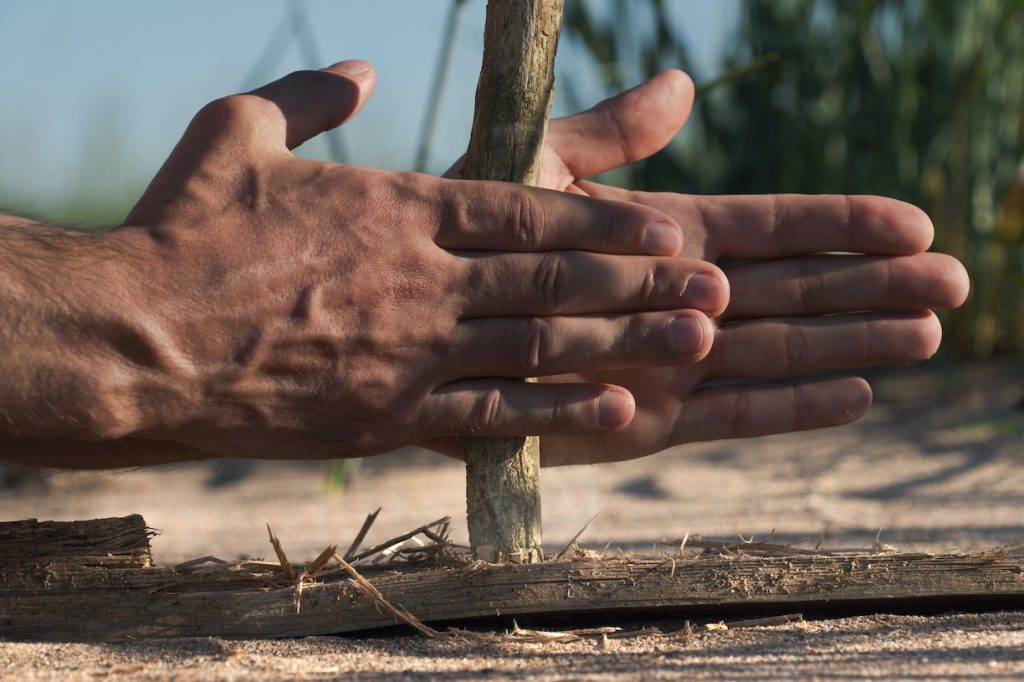
This might sound like a strange thing to say – but friction is like the air we breathe. My wife Lorna and I haven’t been married over 45 years because we’ve learned how to fix friction in our marriage where everything runs smoothly without a squeak. Hardly! Relationships with one another usually grow and deepen where people learn to flex with friction – how to remain with one another within it. That’s much slower, and harder work.
- Less visible.
- Less predictable.
Flexing with friction requires something different than compliance or control. It asks for presence.
- To remain when it would be easier to leave.
- To listen when it would be quicker to resolve.
- To allow space for difference without immediately pressing toward agreement.
I don’t mean we endlessly flex without discernment. We can only handle living in a friction loop for so long. However, some friction reveals the necessary work of learning how to remain with one another. Other kinds of friction signal harm that must be named honestly. Wisdom is learning the difference.
The Opportunity For Lives to Actually Meet
This is where the kind of life we noticed earlier begins to matter. Because, without that kind of life, without a shared awareness of God’s presence, without a willingness to participate rather than manage, without the patience to remain – friction tends to move a community in one of two directions.
Either it fragments.
- People pull back.
- Distance grows.
- Life becomes more individual again.
Or it tightens.
- Things become more defined, more controlled.
- Less room is left for difference.
- The space narrows so that friction can be minimized.
Both are understandable, but neither holds the covenantal life we’re describing. There’s another way, though it doesn’t present itself as a model or a method. I offer an alternative.
A Third Way
This is where people begin to stay. Not because everything is resolved, but because something deeper is held onto. In Christian community, God’s presence isn’t something to strive for or secure, but a Person already given. The presence of God’s Holy Spirit is steady enough to allow people to be imperfect without the whole thing coming apart.
- Where mutuality begins to carry more weight than control.
- Where time is given for life to overlap, not just coordinate.
I’m not giving strategies. Instead, I point to the weather of the Christian community environment where things tend to start slowly, often unnoticed at first. Honestly, this kind of life doesn’t come easily in the soil we live in now.
The Soil in Which We Live
The ground is pressurized. Like a farmer who knows when a field is overworked, our lives can be overworked by pace, by expectation, by the need to keep things moving. In many places, it feels old and tiring. Not empty, but stretched. It can feel like we’re being asked to produce more than we can easily sustain. That shapes what grows or what struggles to grow.
So maybe, the question for a Christian community isn’t whether friction will be present. It will. The question is what kind of life can remain without losing it. The kind of life that doesn’t depend on everything running smoothly, but can take root even where things press against one another.
The truth is, whatever starts growing among us won’t grow in ideal conditions. It will grow here. In this soil.
The next question to ask for next time, “If we’re patient, what can we imagine could grow?”