If Christian community is a seed, we’ve discovered desirable qualities of life that remain consistent across location as the seed grows. We also recognize that each person enters a Christian community with past lived experiences – environments instrumental in shaping their lives. Friction happens but if we’re patient, imagine what kind of community could grow?
A Story from My Past
Years ago, I spent a few seasons pastoring a small rural congregation in Oxford County.
I didn’t grow up around farms. I knew very little about soil beyond what I had read. But in that community, a couple cash crop and dairy farmers let me ask questions, walk their fields, and listen. They spoke about the land with a kind of attentiveness I wasn’t used to.
- Sensible.
- Practical.
- Patient.
Over time, I began to notice something. They didn’t talk about growth the way we often do. Certainly not like the church growth culture I was trained in. They talked about the ground.
More Than Dirt
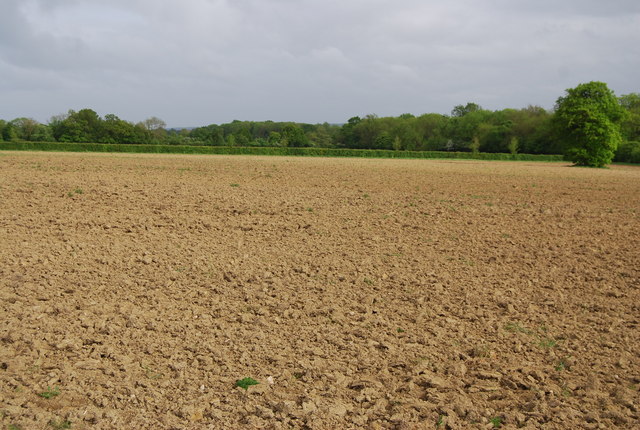
I remember standing at the edge of one of these farmer’s fields and, at first glance, this city boy didn’t see any difference. But they’d notice things I couldn’t.
- Where the soil had been worked too hard.
- Where water didn’t hold the way it used to.
- Where yields had slowly declined, not because of one bad season, but because something deeper was wearing down.
They didn’t call it failure. They called it tired ground. And when the soil reaches that point, the question changes.
Not: How do we get more out of it this year?
But: What does this ground need now?
Let It Rest
Sometimes, the answer was to let it rest. Not because these farmers had nothing better to do. Hardly! But because they knew that to keep working that patch, it would only take more from the land than it could give.
So a field would be left fallow.
- No planting.
- No expectation of yield.
From the outside, it could look unproductive. Even neglected. But it wasn’t. It was being given back something it had lost.
- Time.
- Space.
Farmers give their land a chance for its structure to recover, for nutrients to return, for life beneath the surface to begin again. That’s not an easy decision. It takes trust. Because for a season – or more – there’s nothing to show.
They also taught me that you don’t decide ahead of time how long that rest will take.
- You watch.
- You walk the field.
- You pay attention to how the soil responds.
- You notice what begins to return—slowly, quietly.
Even then, when the soil is ready, you don’t plant just anything.
Choose carefully
Farmers don’t plant just for kicks-and-giggles. They have a purpose for their soil.
- What will this soil receive now?
- What kind of crop will work with the condition it’s in, not against it?
The plan is to plant something that can actually grow. I still remember (even where we were standing in his field) what one farmer told me. Not every piece of land will carry every kind of crop. And in some cases, a section of ground might never return to what it once was.
- Not useless.
- But different.
- Better suited for something else.
Once I was Young, But I’m Older Now
Now, over 20 years later, it’s hard not to hear all of that differently now. Because when this retired Pastor starts to think about shared life – about Christian community at this moment, I know we’re not working with unscathed soil. We’re grounded in dirt that’s been worked hard.
- Shaped by speed.
- Stretched by expectation.
- Pressed by the need to keep producing – spiritually, relationally, practically.
- And even within our communities, that pressure has been carried for a long time.
I guess it shouldn’t surprise us if, in many places, the ground feels tired. Which raises a quieter question than we might expect.
Not: What should we build next?
But: What does this ground need now?
You see, if the soil itself has little capacity left, then any attempt to plant; no matter how well-intentioned, may just draw more from it than it can sustain. This is where the instinct to move quickly can work against us. Even when I recognize the limits of what’s been, there’s still a pull to start again. To form something new, something more faithful, something that will finally hold.
Hold Your Horses!
Jeremy Clarkson is often going on about “I did a thing” so I don’t know how well he has learned this lesson. However, farmers don’t rush a field that needs rest. They don’t force growth because the calendar says it’s time.
- They wait.
- Not passively.
- But attentively.
I think if we take that lesson seriously, then fallow may not be a failure in our Christian communities. Instead, it may be a necessary season. A space where not everything is organized.
- Where expectations are lighter.
- Where people aren’t asked to produce what they no longer have the capacity to give.
It may not look like much from the outside but better than putting lipstick on a pig. Something else may be happening – beneath the surface. And even when signs of life start to show, the next step isn’t automatic.
We still have to ask: What kind of life can this soil sustain now?
Discerning Risk
The risk in planting isn’t just that nothing grows. We also risk planting something that pulls us back into the same patterns that overworked the ground in the first place. We risk returning to:
- More structure than life can carry.
- More expectation than presence can sustain.
- More movement than the soil can support.
And slowly, without intending to, we find ourselves defaulting to something familiar again. So what helps keep that from happening? Systems create safeguards but like a farmer, we need a different kind of attentiveness.
- The kind that stays close to the ground.
- That notices when things begin to tighten too quickly.
- That pays attention to when pace begins to outrun presence.
- That recognizes when what’s forming starts feeling more like maintenance than life.
- That’s willing, when needed, to ease up again.
To loosen up…and make space.
This doesn’t guarantee anything. Farmers know that better than anyone. They know they can read the soil well and still face a hard season. But there’s a difference between forcing growth and working with the life that’s actually there.
Return to the Seed
I draw our discovery of desire to a close We return to the image of a replanting ancient seed.
- Not with a plan.
- Not with a model of what the future will look like.
But with a posture.
One that is willing to:
- let tired ground rest
- pay attention to what is returning
- choose carefully what is planted next
Meanwhile, we trust that the life we seek isn’t something we create, but something we receive and learn to tend. We may not yet see what this becomes and it might not take a familiar shape. Also, some ground may not return in the ways we expect.
But that doesn’t mean nothing is happening.
I admit there’s a disconnect between biblical wisdom and modern culture. Since retiring, and now as a Pastor From the Pasture, I have far more time to observe things around me and spend numerous hours inside my own head. Still wondering in my advancing age, if I might have something of value and meaning to offer others. So I reflect and invite others into less common and possibly less comfortable perspectives.
I recognize that the Bible rarely expects us to resolve things immediately. Instead, it calls us to hold the tension. But our “fix it fast” world is all about speed, efficiency, and eliminating uncertainty (and AI is great for that – not always in a good way). However, in holding this tension, as hard as it is, we teach our minds to learn that God holds us even when we don’t hold the solution. Because, given time, not pressure, something living may yet take root.
Not as a blueprint.
But as a seed.