
Desire is Directional
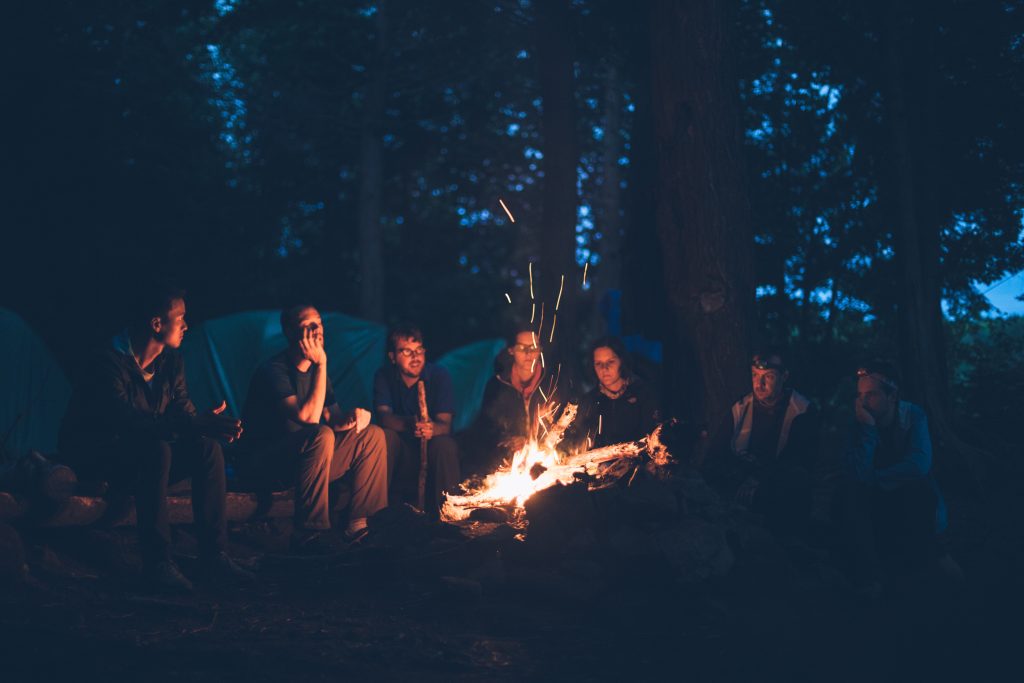
The premise of this project is that desire is directional and it doesn’t stay a personal thought or feeling. Given time, desire arranges your habits. Habits arrange your expectations. Expectations arrange your life. Furthermore, the more we rehearse what we long for; what we want, that eventually becomes the landscape we live in. Desire never stays private.
- We’ve traced acquisition.
- We’ve examined stimulation.
- We’ve wrestled with belonging.
Now we need to ask, “What kind of environment do they build?”
Acquisition
When we learn to measure value by what we can acquire, even subtly, our lives start to drift into the orbit of having enough. Enough success, enough security, enough recognition. We become trained in scarcity rather than contentment. And the thing about scarcity, it’s not only economic – it can also become relational.
Stimulation
The problem with digital overstimulation isn’t access to too much content. Instead, it’s the velocity; the speed in which that content feeds us is the problem. When pace becomes constant and reaction becomes a reflex, patience starts to feel like delay and thins out our attention. Our tolerance becomes shortened so we feel frustrated and annoyed by slowness, and what feels familiar is just…boring. Yet the truth is, and one thing that over 45 years of marriage has taught me, familiarity is the space where love must live.
Belonging
Belonging feels amazing but if it depends upon performance and alignment without friction, that’s nothing more than trying to fit in. In that environment we grow cautious about differences. Loyalty becomes a fragile balancing act. Gratitude toward others is just assumed rather than expressed directly.
In this conditional belonging:
- We manage impressions.
- We protect our image.
- We guard ourselves from exposure.
However, conditional belonging can’t sustain people.
The Convergence
Put these three social contagions together and what do we get? These desires do more than shape individuals, they create a shared environment. They teach us what to expect from one another and they practice life together. We don’t just live in the world, we rehearse it. Every day, in small ways, we regularly practice a future we imagine.
Coming Up
If we rehearse our desire daily, what kind of future are we practicing for? What kind of social order does a Christian community need to live in a commitment-based harmony? That’s what we explore in the remaining articles in this Story of Desire project.
However you visualize the future, the end of the world as we know it or an after-life, the Bible consistently gestures toward something communal. Not disembodied escape, but dwelling. Not an evac from creation, but the healing of creation. Scripture points to:
A city.
A people.
God among them.
The closing vision of the Book of Revelation isn’t faceless. It’s presence. If that’s God’s preferred future for His creation vision, then being unknown, unnamed, or incognito can’t be our final form. Isolation can’t be our destiny.
And so we ask. What kind of social order are we practicing now? A social order marked:
- By accumulation?
- By acceleration?
- By fragile attachment?
Or something slower – more attentive – more durable.
An Alternative Social Order
Perhaps the first architecture of renewal isn’t a tabernacle but a table.
- Open.
- Ordinary.
- Relationally devoted.
I imagine a table where acquisition becomes shared provision. Stimulation becomes attentive listening. Belonging is offered before performance.
I see a table where:
- Names are spoken.
- Stories are heard.
- Generations overlap.
- Difference isn’t erased, but embraced.
Yet, let’s be honest. For many, the “Table” feels like a luxury they’re too tired to reach. When your social order is defined by the 5:00 AM alarm for the morning shift or getting the kids off to school, the anxiety of an empty business account, the grief of a hospital hallway or other trying life experience, “attentive listening” feels like a superpower you don’t have. Yet, there’s a social order even there. It is the order of “The Trench.” It’s the durable, gritty commitment of a family that refuses to let one of its members fall behind.
This is the “architecture of renewal” in its rawest form: not a grand strategy, but a quiet refusal to let scarcity have the final word. It’s a social order built on the back of staying, even when staying is the hardest thing to do. This is where we begin to rehearse a future that isn’t just a dream, but a settled residence.
This is a rehearsal where we resist anonymity and refuse isolation. In the book of Revelation, John had a vision of a new heaven and a new earth but we can’t conceive of what a renewed infrastructure could look like. Understanding the physics of a new creation is beyond us but we do know what healed relationships feel like.
- Gratitude spoken.
- Presence sustained.
- Tension endured without contempt.
Desire builds order in our life but it’s not a closed loop as the fates allow. Our desire can be re-trained through patient practice.
- Not by force.
- Not by scale.
But by staying.
- Branch to vine.
- Life to Life.
It’s taking up residence where a different city begins to take shape.