
Settled Water: Dwelling in God’s Presence
Following the Curve
We begin with the fourth and final part of “The Story of Desire” project where we explore finding our own kind of settled water in a fast moving world. In the first part of our series, we learn from the Hebrew understanding about desire and what it is to be human. Then, Part 2 helps us see what happens beneath the surface. The internal currents of desire, shaped through what catches our attention, cue our memory and settles into habit, often cycling as a feedback loop beneath our awareness.
The curve continues. Part 3 widens the lens to name the pressures around us. Acquisition, stimulation, and belonging; and how they narrow the banks and speed the current. Next, in Part 4, The River of Renewal moves us into a different space. Not away from these realities, but into the kind of shared life that can hold them. This is where the current slows, and we learn, together, how to drink.
He Leads Me to Settled Water
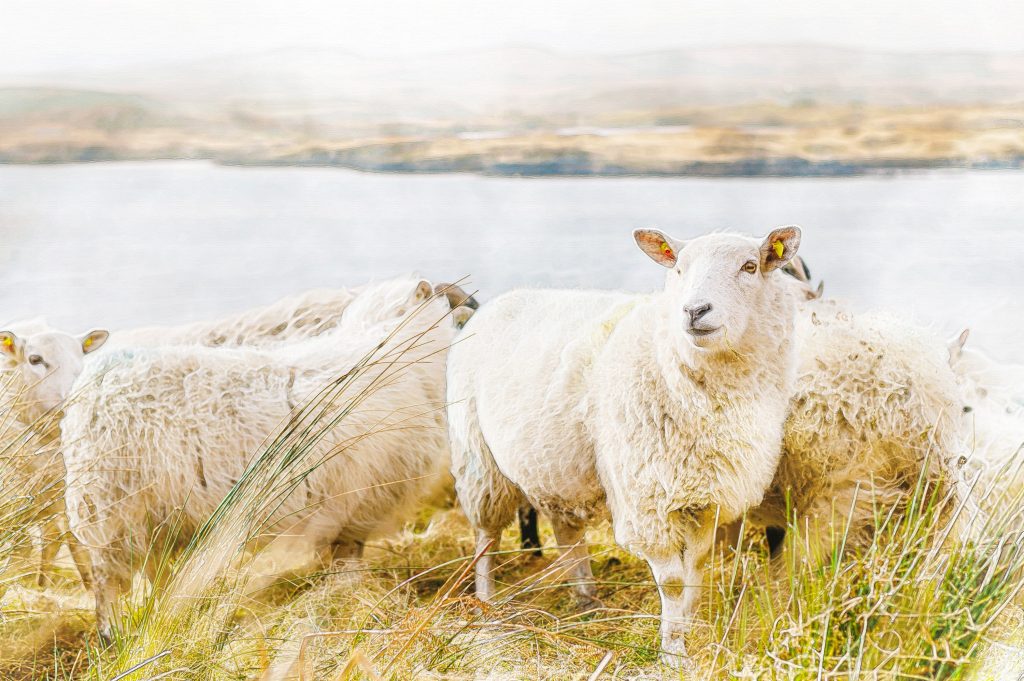
Anyone who has spent time around sheep knows they won’t drink from rushing water. The noise unsettles them. The high speed movement of the current feels dangerous. A sheep may stand beside a rushing stream and stay thirsty rather than lower its head to drink.
So the shepherd looks for something different – it’s what the psalmist calls “settled water” in Psalm 23. You’re probably most familiar with “still water” but I prefer the word “settled” that John Goldingay uses in his Bible translation for the Hebrew word, “mei menuchot.” Not stagnant water. Not raging water. Settled water – calm, gentle, restful.
Consider something else. The “settledness” and “restfulness” isn’t only about the water – it’s also about the place. Both the environment and the water are settled and restful. This is a place where the current slows enough for a sheep to drink without fear.
The image of a river has stayed with me from the start of this series. It starts in Genesis and ends in Revelation. Perhaps you’ve noticed how I touch on the metaphor throughout and lately I drill down on it a bit more.
Directed Desire
From the start of this project, we explored desire’s directional flow through the human person much like a river flows through a landscape. In Part 2 and our exploration of human psychology informing ancient Hebrew anthropology, the river metaphor helps to illustrate what happens inside to direct your desire.
The riverbed is memory – the experiences and stories that shape our past. The current itself is desire, the energy that moves us toward what we believe will give life. The weight and velocity of the water resemble habits, the repeated movements that carve deeper channels over time.
However, rivers don’t flow in isolation. They’re fed by other rivers and banks shape their path. In the landscape of the human heart, those banks are what we might call attachments (or alignments if that floats your boat better 🙂). Attachments narrow or widen the channel through which desire flows. When the banks are narrow, the current accelerates. The water presses forward with fantastic force, often eroding the riverbed and carrying debris downstream. Consequently, when the banks widen, the current slows and spreads. The water becomes calmer, clearer, more drinkable.
Ancient Metaphor For Modern Times
The river is one of humanity’s oldest and most enduring metaphors, utilized across cultures and millennia. The river represents the continuous flow of life, the passage of time, and how change is inevitable. Much in our modern life acts to narrow our river banks. Our attention is trained as to what we should notice and what we can ignore. We experience a constant pull pulled toward acquisition (status, stuff, security), digital stimulation, urgency, and reaction which also influence our desire to belong in a community.
Naturally, our digital and group environments push the current of desire faster and faster, leaving little room for reflection or trust. We may find ourselves surrounded by information, activity, and connection, yet strangely unable to drink deeply from life itself. Instead, desire rushes past us.
Why the Shepherd’s Work Matters
A shepherd can’t stop the river, and he can’t command a sheep to trust the water. I guess he could dam up a river but that wouldn’t do. A stagnant pool isn’t the kind of water sheep will drink from.
Instead, a shepherd works with the landscape. Sometimes he can find a natural pool where the current already slows. Often those drinking stations are further upstream where the water is calmer, clearer, colder (and safer from predators). On occasions he needs to create a station with stones and mounds of dirt in the stream with branches that act like a filter to catch debris. This small diversion (not a dam) is where the water settles where a sheep will drink. BTW sheep don’t like to drink alone so sheepses drink as a group.
Similarly, in the life of faith, I suggest nurturing the restful environment with diversions that take the form of best practices.
- Sabbath rest slows the current of production.
- Shared meals slow the pace of isolation.
- Gathering with others slows the restless movement of the individual life.
These practices don’t dam the river of desire. Nor do they produce the water. Simply, they nurture an environment and create spaces where the water can settle long enough for us to drink.
The early followers of Jesus seemed to understand this instinctively. Their life together wasn’t built around busyness but around rhythms of being present in one another’s lives – earning together, eating together, sharing resources as others needed, praying, and telling the stories of what God was doing among them. In those rhythms, the current of desire began to take on a different shape.
- Not frantic.
- Settled.
Since we’re on the topic of drinking water, let’s explore a bit about the water of which Scripture speaks.
Drinking from the Settled Waters: Psalm 1 in Practice
Let’s go back to the beginning of Jesus’ ministry. He called disciples who:
- Barely knew who He was
- Were still trying to figure out their expectations of Messiah
- Had yet to see the cross, resurrection or Spirit
I think it’s safe to say these words to the Samaritan woman at the well flew right over their heads:
“Anyone who drinks the water I’ll give them, won’t ever be thirsty again. No: the water I’ll give them will become a spring of water welling up to the life of God’s new age.” John 4:14 (The Kingdom New Testament: A contemporary translation by N.T. Wright)
Jesus’ words promise water that quenches thirst forever – a river flowing from the source of life itself. But drinking isn’t automatic. Just as a sheep can’t safely drink from a rushing stream, we can’t drink freely from God without places, practices, and relationships that slow the current enough to sustain life. And for those He called, it involved three years of daily walking beside the River of Life before the disciples started to understand how to drink.
Psalm 1 gives us a poetic map for that practice. It describes the blessed person:
“Like a tree planted by channels of water, which gives its fruit in due time, and it’s foliage doesn’t fade; all that he does succeeds.” (Psalm 1:3)
Here, the river is God’s life flowing through the human heart. It’s about the environment we live into. The tree is the flourishing that grows in the settled waters of Christian community and discipline. Living into this environment with “delight in God’s instruction” and “meditation” aren’t about abstract spiritual exercises. Instead, they’re the stones, dirt and branches that slow and shape the current, prevent silt and debris from clouding the riverbed of memory, and create settled stations from which to drink.
However, notice how those who ignore this rhythm are described – chaff blown away by the wind. Without appropriate attachment, habit, and practices, the river can’t sustain them – they can’t drink. The Psalm frames life as choice, rhythm, and shaping, grounded in the human experience of God’s provision in this life rather than a distant end times extraction from this world to somewhere else.
By following these rhythms – learning to delight, reflect and remain – we rehearse the river as it will flow in the renewed creation of Revelation 22. Psalm 1 doesn’t promise instant perfection as if God expects us to be flawless. Rather, it serves as a guide to living in the river now, practicing to drink, to remain, and to flourish.
Abiding in the Vine: Settled Waters and Branches
While Psalm 1 sets the rhythm for personal growth, Jesus’ teaching in John 15 moves us deeper into relational life within the river. He calls us to remain in Him, the true vine, so that our branches bear fruit. Producing fruit is about performance and effort, but bearing fruit is about attachment, a settled posture in the current of God’s life.
Again, the river metaphor helps us see clearly. Just as a sheep drinks safely where the current is slowed, our desire and life find provision when we’re rooted in community and in Christ. In a water station, branches don’t stop the water – they channel it, catch debris, and provide points of rest along the current. Practices of attachment like gathering at the table, shared stories, confession, and Sabbath rhythms, act as branches and stones that create settled waters. They allow us to drink deeply without being swept away.
Therefore, remaining (taking up residence) in the vine is both relational and productive. Our connection to Jesus shapes desire, regulates habit, and creates the conditions where shared success with one another is possible. The reason I join the metaphors of river and vine is to show that fashioning our faith isn’t a solo journey. Just as Psalm 1 emphasizes delight and reflection on God’s instruction, John 15 reminds us that our wholeness and well-being; our shalom, is relational. Because, branches can’t bear fruit on their own. Experiencing the settled waters of Christian community and the remaining in Christ are inseparable, each reinforcing the other.
Closing: Preparing to Drink Deeply
As we pause here, the river isn’t a distant promise but a present reality. Psalm 1 shows us how delighting in God and reflecting on His instruction roots us like a tree by a river. Furthermore, John 15 reminds us that true thriving happens in attachment to Christ, the Vine, and in the relational network of branches.
Yet, drinking fully from this river isn’t automatic. It requires the diversions, channels, and supports – the stones, dirt, and branches that filter and slow the current just enough for life to take hold. These best practices create the settled waters where desire can be shaped, habit regulated, and trust nurtured.
In the next article, we explore how these practical practices form the channels of the river, shaping community, attachment, and desire so we can drink more deeply, remain more faithfully, and prepare for the river to flow in its fullness toward the renewal of creation.