Desire’s Flow
Now, at the end of Part 2, let’s step back and see the full arc traced over 5 articles. Our desires follow a path through attention, memory, attachment, and habit – and even into the subtle sway of social contagion. In other words, what we notice, what we remember, what we attach ourselves to, and what we repeat shapes the paths our desires follow. However, it’s important to remember that this isn’t a linear process from A to B. Instead, it’s circular; like a feedback loop. If you haven’t already read it, a previous short review illustrates this using a river metaphor. Yet, the forces that fashion us don’t stop at the personal level. They extend into the stories that shape us. These are stories we share, the communities we inhabit, and the culture that surrounds us.
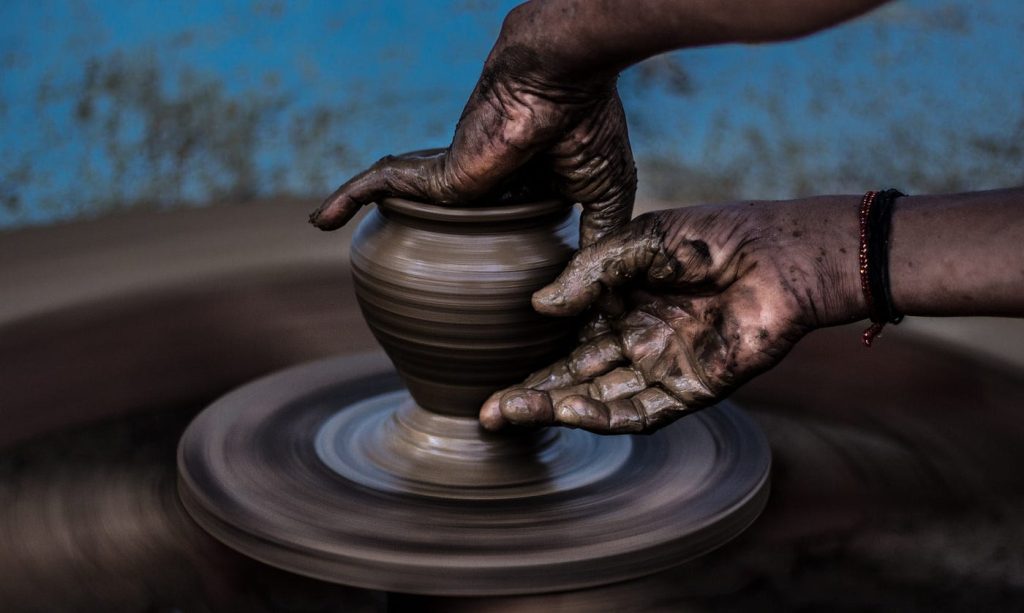
For centuries, God’s people lived in tension between their covenantal story and the stories of the world around them. For example, we saw it in the tale of the two sisters. Israel lost and Judah hardened through generations of survival under exile. We saw it again in the first followers Jesus called, shaped by economic pressures, political tensions, and educational expectations that were foreign to the vision of God’s upside-down kingdom. The disciples were like clay still soft enough to reshape, the vessels through whom God’s story could continue despite social forces pressing in from all sides.
The Saviours We Trust
Even today, social saviours draw us. These are people, ideologies, or movements that promise protection, status, or clarity. Yet, Jesus models a different kind of Saviour: one whose influence flows not from worldly power but from covenantal faithfulness, suffering, and relational presence. I believe, part of understanding desire in a social context, means seeing how easily our hearts lean toward what looks safe, popular, or compelling, and how disruptive it can be to embrace the path of the Suffering Saviour instead.
Recall the three forces we highlight in our previous sidebar:
- Economic contagion: scarcity and infrastructure pressures of everyday life, then and now, shape what we hold on to.
- Political contagion: extremism, fear, and power plays that create pressure-cooker environments for desire.
- Educational contagion: knowledge, or lack thereof, that frames what we think is possible, shaping who we trust and follow.
Each of these forces quietly rehearses a story in the lives around us, and in us. Often, we don’t even see it.
The Stories That Shape Us
Ultimately, culture is nothing more and nothing less than the story we rehearse together. It tells us what’s good, what’s valuable, and what’s worth longing for. The stories that shape us are stories we hear, sing, and repeat in community. They act as training grounds for our desire. When we gather around a shared narrative – whether in music, ritual, media, or conversation; our memories, attention, and attachment reinforce patterns that eventually settle into habits. Some stories nurture life and commitment-centred alignment; others, even subtly, draw desire away from what’s good and relationally connected.
“Familiarity Breeds Contempt”
You’ve probably heard that old saying. I think this can be true. First, contempt doesn’t mean “hate.” Like “contempt of court,” it’s a quiet (and sometimes not so quiet) disregard for the familiar; the way things are done around here – in our homes, relationships, schools, workplaces, social circles, digital spaces; wherever life finds us.
We start to hold our own people, patterns, and places as less valuable just because they’re known to us – they’re just so…familiar. But this disregard often stems from a deeper dissonance: the landscape has changed. When the environment that shaped our original attachments has changed or longer exists, our old habits can feel like a hollow weight. We find ourselves holding our current shalom (wholeness, well-being) in contempt because we’re trying to find rest in a rocky riverbed that’s run dry. This internal friction – a devaluing and diminishing of our own ground, is exactly what makes a “new” social story feel like a rescue, even when it’s just a different kind of exile.
This blog space is my home turf to reflect and learn. Writing weekly as the Pastor From the Pasture is a way for me to rehearse, test, and clarify the desires that guide me. Admittedly, even in my social isolation (yet, trusting that others in cyber space are reading), I believe the act of writing, remembering, and naming what matters forms my desire in a faithful way. My intention and commitment is to echo the stories of those who, like the ancients, lived faithfully under the pressures of exile and uncertainty. One day, perhaps, I too will gather a community of others whose desires resonate with mine.
Seeing the Pull Without Losing Our Grip
Social forces shape us, whether we recognize them or not. And yet, sometimes we do notice. We sense the tug of stories that feel familiar, the appeal of what everyone else is following, the subtle pull toward what seems safe or satisfying. Seeing the pull doesn’t mean we’re failing. No, it’s the first step in choosing the stories we allow to shape and lead our lives.
By understanding how personal attention, memory, and habit intersect with social influence, we’re better equipped to notice when our desire is being steered. From there, we can intentionally rehearse stories that align with God’s promise-based vision.
Toward Part 3
Part 2 traced the flow of desire from internal patterns to social shaping. Part 3 turns outward, examining the modern forces, the networks, and the stories that help to fashion desire today. We’ll look at how markets (consumer psychology), digital stimulation, and communal narratives train attention, shape memory, and amplify attachment – sometimes in ways that align with God’s story, often in ways that pull us elsewhere.
Ultimately, desire isn’t neutral. It’s shaped. It’s trained. However, the question we face now is: What stories will we allow to train our hearts in the world we live today?