
If desire follows attention, then memory is the path attention most often travels.
In the previous article, we explored attention as the narrow but decisive lever of human agency. The truth is, we can’t choose every impulse or thought that comes up inside us; most emerge from beneath the surface of our awareness. However, we can learn – slowly and relationally – to attend. Scripture assumes our limitations. The nephesh; your whole self as a person, is open to the world, but you can’t endlessly take everything in.
I can tell someone to “pay attention.” As a husband, father and grandfather I do that a lot; almost instinctively. However, that doesn’t do them much good. The truth is, they don’t need more information from me. That’s because, what repeatedly captures our attention begins to shape what feels real and safe to us. Eventually, that’s what we want.
Memory names what happens next.
Memory Is an Act, Not a Shadow
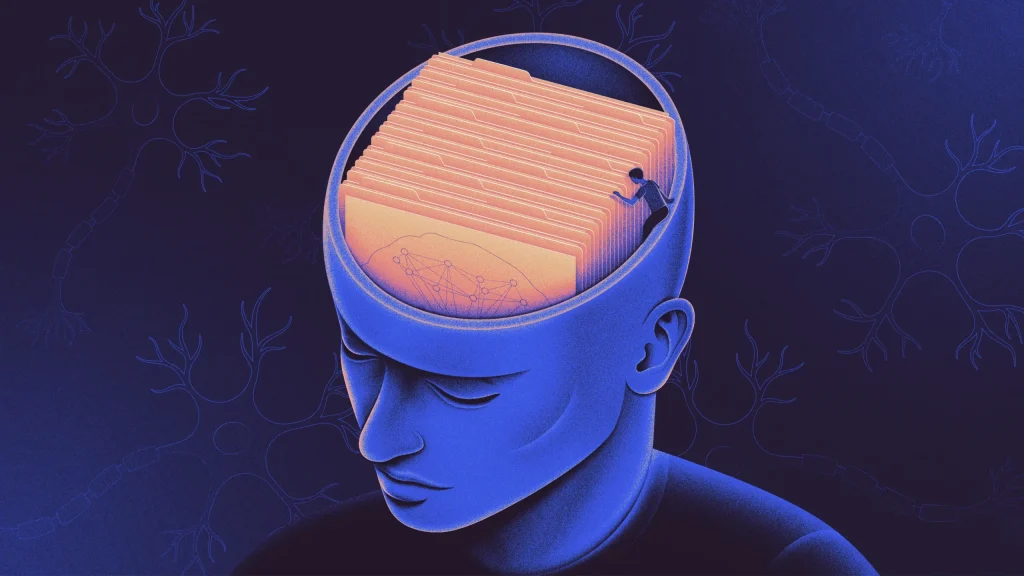
In modern Western thought, memory is often treated as a shadow of the past – like an internal memory drive we consult when needed (see the image at the top of this page), editing the content a little bit each time we open a file. Truthfully, the further we move from the original event, the more unreliable our memory is. However, Scripture understands memory very differently. Remembering isn’t a passive recall; it’s an act. The Hebrew verb zakar doesn’t describe only retrieving information stored in your memory archive. Additionally, you actively bring the past into the present in ways that shape the forward direction of your life. This is the perspective I ground this article in.
Memory Lives in the Nephesh
However, as you well know, memories often show up uninvited. A song, a smell, a place, a phrase – then suddenly BOOM! The past isn’t behind us – it’s with us! This isn’t a mental glitch nor a moral failure. It reflects something that makes us human: memory is physical, directional, and active. The entirety of who you are – not just your brain but your physical body also has memory. Bodily skills like riding a bike or dancing are stored in your muscles and nerves.
To understand why desire often returns to familiar patterns; even when we want to change, we need to see memory not as something we have, but as something we walk continually.
Memory is Directional
The biblical view of memory is never neural or neutral only. It’s physical and always points somewhere. For this reason, Scripture repeatedly urges God’s people to remember – not only to exercise your little grey cells, (Agatha Christie’s famous Belgian detective, Hercule Poirot, solved some of the world’s most puzzling crimes using only his “little grey cells.”) but as an act of commitment. Remember the exodus and the wilderness. Remember the Lord who brought you out, who you are and whose you are.
Ultimately, to remember rightly is to allow the past to serve your present rather than to chain you to it. On the other hand, to remember wrongly – or incompletely – is to let memory distort desire by narrowing your attention toward fear, control, or self-protection.
Desire Forms Along Paths We Remember
The premise of our article, Desire as Attention, is, “Where attention goes, desire follows.” Now, in this article, we explore how memory marks the way.
Pointing back to what I said earlier about riding a bike or dancing. Memory isn’t only neural but also physical. For that reason, memory shapes what our attention expects to find. Anyone who plays an instrument, drives a car or performs a procedure many times understands this. You don’t need to teach yourself every time you play, drive or perform. Memory doesn’t require you being aware of what you’re thinking or feeling but it does need to be active and adaptive.
However, redirecting our desire is rarely a quick fix. It’s not a matter of controlling an impulse or correcting a thought. Instead, it’s a slow, relational roll – allowing new memories to be formed, rehearsed, and trusted. Scripture seems to understand this intuitively. Your faith matures through repeated acts of remembering, retelling, rehearsing, and returning.
Desire, then, isn’t healed by forgetting the past, but by remembering it differently – within the wider story of God’s faithfulness, presence, and promise.
When Memory Learns to Protect Instead of Trust
Fear Teaches Memory
However, our memories can narrow our attention when we sense a threat or insecurity. When fear enters the picture – whether through danger, loss, shame, or prolonged uncertainty; memory changes its posture. Instead of widening our sense of possibility, it tightens. Instead of supporting curiosity or trust, it rehearses threats. Therefore, fear isn’t just what we feel; fear also teaches our memory.
For example, I’m sure you’ve watched a movie or TV show that, without your consent, triggered a threat memory that forced you into exposure therapy. A character goes all rugged individualism telling another to:
- “Fear not.”
- “Faith Not Fear.”
- “Face your fear.”
- “Name your fear.”
Statements like that teach us to see fear as an enemy to defeat and dominate. However, I suggest fear can overstay its lane – like a person driving at or below the speed limit in a passing lane. Fear isn’t the opposite of faith; mistrust is.
When the Past Doesn’t Stay in the Past
Additionally, when the original threat passes, the memory often remains. Even when the danger is gone, the body remembers it in your muscles and nerves. The situation has changed, but the entire living person still anticipates harm. Before clinical language came along, Scripture names this reality vividly. Hardened hearts. Stiff necks. Shortened vision. These aren’t insults! They’re descriptions of people whose memory learned how to protect itself by narrowing life.
When memory remains stuck in survival mode, desire follows suit. We want what’s immediate. We’re motivated to control. We want what keeps the spotlight on potential danger rather than on shared life. This helps explain why misdirected desire often feels so convincing – even when it isn’t logical or rational. Misdirected desire doesn’t chase contentment; it manages fear. Scripture’s story says healing doesn’t come by kicking our fears. We heal when fear is no longer the loudest voice narrating our present story.
Why Egypt Still Feels Familiar
The biblical response to misdirected memory isn’t to suppress or erase it. Scripture never tells people to forget their pain. Instead, it invites us to remember within a larger story. This is why remembrance in Scripture is communal and repeated. Participating in festivals. Sharing stories. Eating meals together. Reciting Psalms and even laments. These practices don’t deny suffering. They place it within a covenantal frame where fear isn’t the final authority.
Instead, rather than commanding Israel to stop remembering Egypt, God invites them to remember the exodus more deeply. Similarly, see how the resurrection stories don’t erase the trial, trauma or tragedy of the event, Jesus still bears wounds. In his doubts, Thomas affirms. Memory always remains, but it no longer governs desire – it’s re-situated as a witness within the relationship.
Misdirected Memory Isn’t Moral Failure
Ultimately, the human mind is built to protect life. When safety feels uncertain, our attention narrows. Therefore, memory begins to prioritize what helped us stay alive before – emotionally or physically. Over time, these memories become loud, familiar, and convincing. Eventually, those memories shape desire by shaping what feels safe, stable and secure for us to want. This isn’t a moral failure. It’s a human response.
On the other hand, I think it’s important to note, Scripture suggests that a life organized primarily around fear will struggle to attend to God, others, or shared well-being. Modern platforms – social media, news apps, and notifications, aren’t inherently harmful, but their design amplifies fear, anxiety, stress, frustration, and outrage. The algorithms feed on our attention, nudging memory and desire toward what seems urgent rather than life-giving. Turmoil surges through our nephesh (everything that makes us a complete person) overloading our limited lever of attention and therefore, misdirecting our desire. This isn’t because you have no faith, little faith, or weak faith. On the contrary, it’s because attention has learned to stay vigilant. A living soul becomes watchful, guarded, and reactive. Our brain and body aren’t meant to live in that state constantly.
In addition, consider the biblical understanding of memory and remembering.
Remembering Without Being Ruled by Memory
As already stated, our memory doesn’t always lead us toward wholeness and well-being and memories often rise up uninvited and unwelcome. Scripture is really honest about this. Israel remembers Egypt not because it was good, but because it was known. In the wilderness, hunger and uncertainty awaken memory, and memory pulls desire backward. “At least there we had food,” they say. Yep, “eating leeks and onions by the Nile; ooh what breath for dining out in style” (Listen to Keith Green’s humorous take on this part of Israel’s story).
Memory narrows the horizon until survival feels more urgent than freedom. This is how misdirected memory works. Hear this; our memory doesn’t lie to us; it selects for us. It highlights what once helped us endure and hides what once enslaved us.
Resurrection as Re-Remembering
This is also why resurrection stories in the New Testament unfold through recognition rather than explanation. In other words, Mary mistakes Jesus for the gardener until he speaks her name. The disciples on the road to Emmaus walk with Him without awareness of who He was until the bread is broken; then the light turns on! On the beach, the smell of hardwood and the shared meal awaken Peter’s memory – not to condemn him, but to restore him. I love how memory brings their past to their present and moves their desire into a life-full future.
Memory doesn’t accuse; it calls.
Widening Attention, Slowly
Practically, modifying memory isn’t like flipping a switch – if only! It’s a gradual widening of attention through safe, repeated, relational experiences. Scripture seems to bake that pace in place. For example, Abram’s story unfolds over years, not moments. Trust grows through walking, not convincing.
As a Pastor From the Pastor, this matters to me. Many people assume faith should silence fear; as if fear must be conquered. Scripture suggests something different. Faith transfers fear by slowly teaching our memory that safety doesn’t depend on control.
When attention begins to widen – even a little – desire follows. Your whole self learns that you can turn your life toward God and others without always being on alert. In other words, memory becomes a guide rather than a guard.
A Gentle Invitation
If misdirected memory shapes desire, then healing doesn’t start by correcting desire directly. It begins by offering your memory new experiences of trust, presence, and shared life. This is why Scripture returns again and again to simple, personal and practical acts: listening, eating together, telling the story again, walking the land, remembering aloud. These practices won’t force change, but they’ll make space for it. Desire doesn’t need to be shamed and guilted. It needs to be re-taught what’s safe to want.
Memory lays the trail, attention follows like the watchful sheep. Where are your steps carrying your desire?