Do You Have a Happy Place?
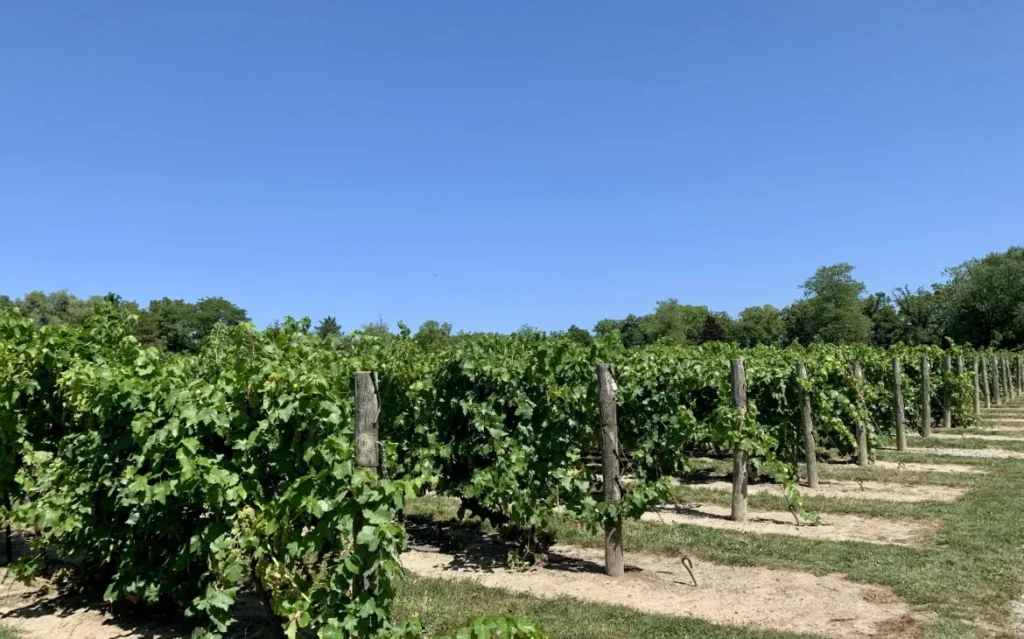
My wife Lorna and I do. Every year for over 10 years we drive to this place for a micro-getaway and we pass by scenes like the picture above on the way into old town Niagara-on-the-Lake. There we spend a few days; take in a couple Shaw Festival plays, walk through the shops, enjoy some amazing meals and just chill overlooking the Niagara River. It’s a nice break from regular routines.
We live in a world built on contracts, deals, and transactions. But when Jesus gathered His disciples on the night before His death, He didn’t hand them an agreement to sign. He gave them a picture from the soil:
“I am the true vine, and my Father is the gardener… you are the branches.” (John 15:1,5)
For a first-century listener, this wasn’t just poetic language. Vineyards covered the hillsides. Families invested years of patient care in tending them. Everyone knew the sweat, the pruning knife, and the harvest. Jesus chose this image on purpose but before we unpack a bit, let’s take a look at a song the prophet Isaiah sang in Isaiah 5 1-7.
A Singer-Songwriter’s Strange Song
In his song, Isaiah pictures God as the Master Vinedresser who chose the best soil, cleared the stones, planted choice vines, built a protective hedge, constructed a stone watchtower in the middle of the vineyard and even cut a wine press into the rock in anticipation of a harvest. Everything was done with meticulous care. Yet when the time came, the vineyard produced only wild, rotten, grapes.
The song ends with a stinging question, asking the people of God to evaluate for themselves: “What more could have been done for my vineyard than I have done for it?” (Isaiah 5:4). The problem wasn’t with the Vinedresser but with the vineyard itself—Israel had failed its calling. Judgment followed, not in fiery destruction at first, but in abandonment: God said He would stop pruning, stop tending, and let the vineyard go wild. In vineyard language, not pruning is the surest sign of rejection.
Now centuries later, Jesus stands before His disciples and declares, “I am the true vine, and my Father is the vinedresser” (John 15:1), His words retrieved memories in the minds of His hearers of that old song. Israel, the failed vineyard, isn’t the last word. Jesus is the faithful, fruitful vine Israel could never be, he is good enough when we could never be. And those who belong to Him are the branches, called to bear fruit out of His life.
Here is the startling difference:
In Isaiah, pruning stopped as judgment.
In John, pruning continues as grace.
The same hands that once tore down the hedge are the hands that continue to carefully tend each branch. God is still hands-on, still active, but now His work is about redeeming rather than just judicial. The vineyard that once yielded only bitter, rotten fruit, now becomes the vine that produces life, joy, and love—as long as the branches remain connected to the true vine.
The Branches: Dependent, Not Independent
Then comes the shift: “You are the branches.”
Here’s the sting of the metaphor. A branch has no life in itself. Its only hope is its connection to the vine. Left on its own, it quickly dries and dies.
Then Jesus says, “Apart from me you can do nothing.” Does that mean we can’t do anything and succeed without Jesus? I don’t believe that. With the right skills and abilities we can build businesses, have homes, make money, even grow successful churches without Jesus. We can and often do chase our own agendas. That’s not the issue.
Jesus is talking about staying connected to a sustainable life source. Remember, every human is made in God’s image, we have something of God’s likeness in us. God has freedom of choice and action, so do we. Therefore, we can choose to respond to or reject God’s love nature toward us and part of God’s lovingkindness involves some painful intervention.
Slicing Sap Suckers
Every branch is touched by the vinedresser’s hand. Some are cut away; others are pruned.
But let me get this out of the way. Jesus is not talking about people being judged and sent to hell or some other kind of eternal damnation.
If you only take one thing from this article hear this, this metaphor is deeply rooted in the mutual relationship between God, us and our fruitfulness, not cutting people off and sending them into the fire.
Cut off: In vineyard practice, vinedressers remove unproductive shoots. They’re “sap suckers” that grow from the vine root just beneath the soil surface or at the base of the vine. They grow vertically with healthy foliage but no fruit. It makes sense since sap flows first through them before reaching the branches further up. They compete for water and nutrients, and act as a parasitic drain upon the fruit bearing branches. These shoots are also more prone to disease and pests that can affect the health of the vine, even the fruit can become diseased. So Jesus isn’t talking about damnation, he’s talking about uselessness and disconnected branches have no life left in them.
Pruned: Even the healthiest branches need trimming back. It feels harsh, but pruning concentrates life so grapes can mature into sweetness.
The point is not destruction but flourishing. Even painful cuts can be instruments of love, shaping us toward greater fruitfulness.
In closing, I emphasize, pruning isn’t God’s threat of rejection but His invitation into deeper fruitfulness. It’s the steady, skillful work of a farmer – weathered by seasons, watchful over the fields, invested for the long haul – who sees the unseen. Where Isaiah’s vinyard yielded bitter, rotten fruit, Jesus the true vine offers a new harvest, not by fear of rejection, but by grace of abiding. Our calling isn’t to mimic the vine but to remain in it, trusting the Farmer who tends what we can’t see.