
Holding the Water Together
From Water Station to Riverbanks
In the last article, we stayed close to the water station – the place where a shepherd slows the current just enough for sheep to drink. Stones, dirt, and branches create a small but meaningful diversion. Not a dam. Not control. Just enough space to receive refreshment.
Answer me a riddle.
Without banks, water spreads, loses direction, and eventually disappears into the ground. With banks, however, the current is guided – and along those edges, something else begins to form.
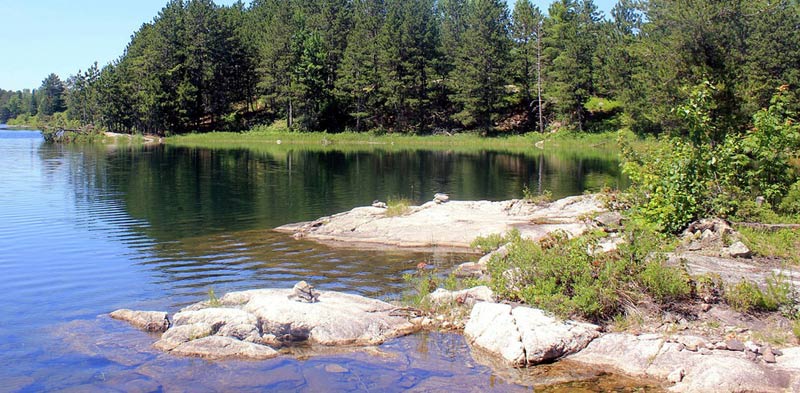
The banks aren’t bare. Over time, they become lined with native vegetation, roots, and trees – acting as a ribbon of life they hold the water and are sustained by it. Healthy natural shorelines along lakes, creeks, rivers, ponds, canals, inlets and oceans contribute significantly to the overall health of our entire water system.
What the Banks Really Are
As a metaphor for the life of a Christian community, these banks aren’t programs or structures in the institutional church sense. Rather than performing; they’re about participating in something relational and organic. They’re the attachments that form over time:
- shared life
- mutual commitment
- trust that builds slowly
- relationships that hold under pressure
While practices create space, its relationships begin to hold that space together. This doesn’t happen quickly. Nor can it be forced. Love can’t flow where coercion controls. Just as a riverbank is shaped over time by the steady movement of water, so too a community is formed through repeated presence – not just showing up but staying, and learning to live alongside one another.
When the Current Presses Back
Of course, this kind of life doesn’t form in a vacuum. A river is always under pressure. Even as a Christian community gathers, other currents continue to push against it.
Realistically, there’s the pull toward acquisition – pressure to secure, to keep up, to make sure there’s enough. For many, this isn’t about excess. It’s about stability. It’s about navigating rising costs, uncertain futures, and the sense that there’s little room for error.
There’s also the constant current of stimulation. In a digital world, information never stops. Attention is fragmented. Even in moments of rest, our mind keeps moving. Honestly, the current doesn’t slow down easily.
And beneath both, is the deep longing for belonging. I’m not talking about just surface connection, but a place to be known without needing to prove, perform, or protect. Yet in many spaces, belonging feels fragile – something we can gain or lose depending on how well we fit in.
These aren’t distant ideas. They shape the way our lives daily move like a river.
- They narrow the banks.
- They increase the speed of the current.
- They make it harder to slow down, harder to trust, and harder to receive.
For many of us in our Canadian context, this is lived somewhere between scarcity and security – we feel pressure to hold life together and like clay on a potter’s wheel, that pressure shapes almost every decision we make. This is why the banks matter. They don’t remove these pressures, but they help hold space within the banks.
How the Banks Are Formed
In previous articles, I call the practices we participate in, “building materials” for our gathering spaces. In the river ecology, I compare them to the stones, dirt, and branches of a water station created by a shepherd for sheep. Just like banks shape the force for a river, relationships are the banks that form through ordinary, repeated life together:
- returning to the table
- making room for one another’s stories
- staying present when things are unclear
- allowing time for trust to grow rather than forcing it
Over time, something begins to take shape. People start to see one another. Patterns of care appear. Space begins to feel more stable. The river doesn’t stop moving – but it’s held.
Presence Within the Pressure
Even here, the question isn’t just about what we do together, but how we’re present together. Because with over 50 years lived experience in church culture, I can say the same Christian community can feel very different depending on how people show up.
- A shared meal can become routine – or it can become a place of real connection.
- A conversation can remain surface-level – or it can open something deeper.
- A gathering can carry the same urgency as the world outside – or it can begin to settle the current within us.
So the shift continues. Not toward more structure and organization but beyond structure and toward a deeper presence. For example:
- Listening without rushing to respond.
- Staying when things feel uncomfortable.
- Choosing to receive rather than perform.
These are small, simple movements. Yet they strengthen the banks more than anything else.
When Rivers Meet
Furthermore, I also know that no one person arrives in a Christian community as settled water. Each one brings a current already in motion. We all have a history, our own set of experiences, a way of moving through the world. When these currents meet, let’s be real, it’s not always smooth sailing.
- Some currents move quickly.
- Some currents carry weight.
- Some currents resist slowing down.
At times, tension rises to the surface. Misunderstandings happen. Things that were hidden start to show. This isn’t a river failing. It’s part of how a river forms because a river doesn’t grow by staying separate. It grows as streams meet, press against one another, and gradually they find a shared path forward.
In Christian community, the work of the Good Shepherd is patient. Not forcing harmony. Not eliminating differences. But holding the space long enough for something deeper to form.
Holding Without Controlling
There’s an important distinction here. Remember, banks hold the river – but they don’t control it. If the banks become too rigid, the water is forced into unnatural pressure. It’s amazing how much water pressure can build. If banks collapse entirely, the river loses its shape.
A healthy Christian community lives somewhere in between. There’s enough structure to hold life together but not so much where life serves the structure instead of the other way around. There’s enough openness to allow life and love to move without controlling it out of existence. The urge to control creates just one more system that greases squeaky wheels so things run smoothly as long as everyone remains compliant.
This Pastor From the Pasture has lived and served long enough to know through lived experience to say, this balance isn’t easy.
- It takes being attentive.
- It requires humility.
- And it requires a willingness to adjust as the river changes; to flex with friction.
But when it holds, something attractive starts to show.
From a Place to Drink…to a Place to Live
At some point, often without us noticing the transition, the river begins to feel different. What started as a place to drink, becomes a place to live. Here are some signs:
- People begin to linger.
- Conversations deepen.
- Trust grows quietly beneath the surface. Trust is a gift given.
The thing about settled water is it’s not still and stagnant. There’s still some current there; but it no longer carries everything away. Instead, life lingers along the banks and begins to take root. This isn’t perfection if that means being flawless. There still are moments of tension, distraction, and drift. However, the river is no longer fragile. It’s becoming something that can sustain life together.
Looking Ahead: Where the River Flows
And as this shared life takes shape – as water is held within the banks, as relationships deepen, as the current begins to settle; another question starts to surface.
What’s this river for?
Truth is, rivers don’t exist only for themselves. They move. They carry life outward. They shape the landscape beyond their own banks. In the next article, we’ll explore how a formed community begins to flow beyond itself – not by trying harder, but by carrying the life it has learned to receive.